
AI vs. traditional methods for image deblurring
Image deblurring, the process of restoring sharpness to blurred images, has long been a challenge in image processing. Traditional methods have laid the groundwork, but recent advancements in artificial intelligence (AI) have introduced a formidable contender. In this article, we’ll delve into the strengths and weaknesses of both AI and traditional approaches, ultimately exploring which holds the edge in the quest for crystal-clear images. 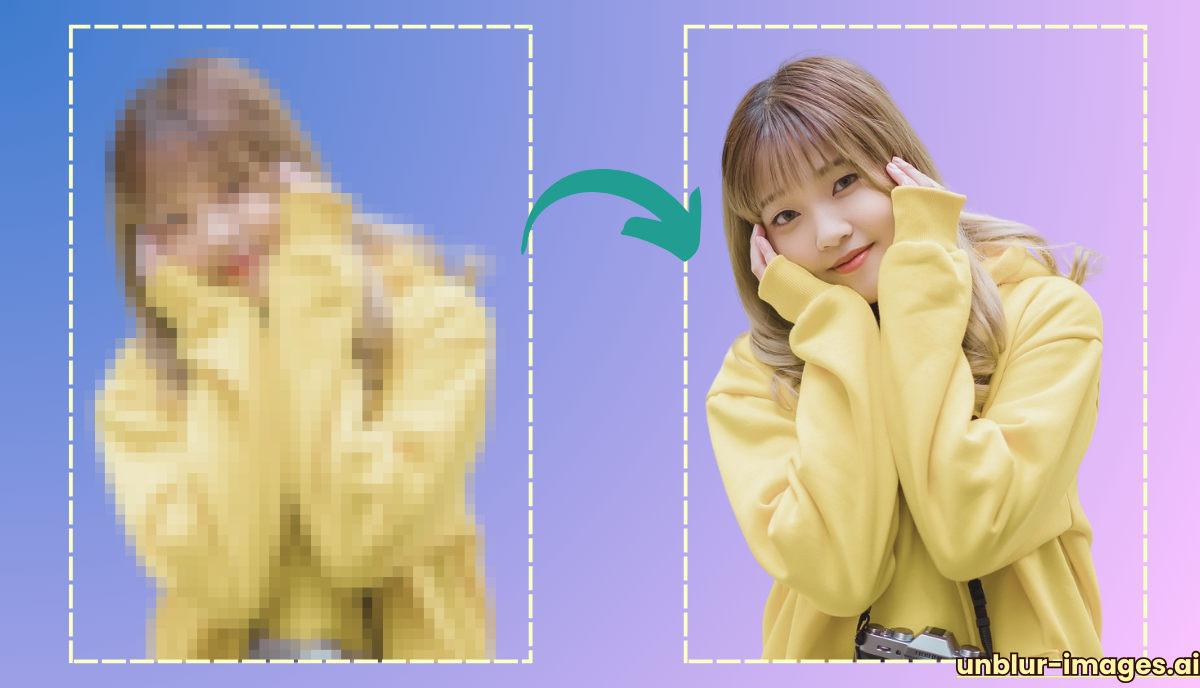
Traditional Methods: The Foundation of Deblurring
Traditional deblurring methods have been the cornerstone of image restoration for decades. They often rely on mathematical models and algorithms that aim to reverse the blurring process based on assumptions about how the blur was introduced.
Key Traditional Methods:
- Inverse Filtering: This technique assumes a linear blurring process and attempts to deconvolve the blurred image by dividing its frequency spectrum by the blur kernel’s spectrum. However, it can be sensitive to noise.
- Wiener Filtering: An improvement over inverse filtering, Wiener filtering incorporates noise considerations and provides a more stable solution.
- Richardson-Lucy Deconvolution: This iterative algorithm is particularly well-suited for deblurring images affected by Poisson noise, common in low-light photography and microscopy.
- Blind Deconvolution: In cases where the blur kernel is unknown, blind deconvolution algorithms estimate both the blur kernel and the original image simultaneously.
Strengths of Traditional Methods:
- Well-Established: These methods are well-understood and have a solid mathematical foundation.
- Predictable: They often produce consistent results under specific conditions.
Weaknesses of Traditional Methods:
- Limited Scope: They may struggle with complex blur patterns and real-world scenarios.
- Computationally Intensive: Some algorithms can be time-consuming, especially for large images.
- Prior Knowledge: They often require prior information about the blur kernel or noise characteristics.

AI-Powered Deblurring: The Rise of Neural Networks
The emergence of deep learning and neural networks has revolutionized image deblurring. AI-powered methods, particularly those based on convolutional neural networks (CNNs), have demonstrated remarkable capabilities in tackling complex blurring scenarios.
Key AI Methods:
- Supervised Learning: These models are trained on pairs of blurred and sharp images, learning to map the relationship between them.
- Unsupervised Learning: These models don’t require paired training data. They learn to generate sharp images by understanding the statistical properties of natural images.
- Generative Adversarial Networks (GANs): GANs consist of a generator and a discriminator network that compete against each other, resulting in highly realistic deblurring results.
Strengths of AI Methods:
- Superior Performance: AI models often outperform traditional methods in terms of image quality and handling complex blurs.
- Generalization: They can adapt to various types of blur without requiring specific prior knowledge.
- Speed: While training can be computationally intensive, inference (deblurring) with trained models is often fast.
Weaknesses of AI Methods:
- Data Dependency: High-quality training data is crucial for good performance.
- Black Box Nature: The inner workings of neural networks can be opaque, making it challenging to interpret their decisions.
- Overfitting Risk: Models can overfit to the training data, leading to poor generalization on unseen images.

The Verdict: Which is better?
In the realm of image deblurring, there’s no one-size-fits-all answer. The choice between AI and traditional methods often depends on the specific application and available resources.
- Complex Blurs: AI models generally excel at handling complex and realistic blurs, making them the preferred choice for challenging scenarios.
- Computational Constraints: If computational resources are limited, traditional methods might be a more practical option.
- Interpretability: When understanding the deblurring process is essential, traditional methods offer greater transparency.
Practical Applicability
In practical applications, the choice between AI and traditional methods depends on the specific requirements and constraints of the task.
- Accessibility: Traditional methods are easier to implement and require less specialized knowledge. They can be applied with minimal setup and are often available in standard image processing libraries.
- Customization: AI methods offer greater flexibility and customization. Once trained, they can be fine-tuned for specific applications and integrated into larger AI pipelines.
- Scalability: For large-scale applications, such as video deblurring or real-time deblurring in autonomous systems, AI methods are more scalable. They can process large volumes of data quickly, leveraging parallel processing capabilities of modern hardware.
The Future of Deblurring
The future of image deblurring likely lies in a hybrid approach that combines the strengths of both AI and traditional methods. We can expect to see AI models becoming more interpretable, while traditional methods continue to evolve and integrate with AI techniques.
The ongoing development of advanced AI architectures and the availability of vast amounts of training data will undoubtedly propel image deblurring to new heights, enabling us to capture and restore images with unprecedented clarity.
Conclusion
The debate between AI and traditional methods for image deblurring is not a matter of one simply being “better” than the other. Both approaches have their distinct advantages and drawbacks, and the optimal choice depends on the specific requirements of the task at hand. AI models, powered by deep learning and neural networks, have undeniably revolutionized the field of image deblurring. They excel in tackling complex blurs, generalizing to diverse scenarios, and often outperforming traditional methods in terms of image quality. However, their reliance on high-quality training data, potential for overfitting, and inherent “black box” nature can pose challenges.
Traditional methods, while sometimes limited in scope and computationally demanding, offer a solid foundation built upon well-established mathematical principles. Their predictability, transparency, and suitability for scenarios with limited computational resources make them a valuable tool in the image processing arsenal.
FAQs
- Can AI completely replace traditional deblurring methods?
While AI has made impressive strides in image deblurring, it’s unlikely to completely replace traditional methods in the near future. Traditional approaches still hold value in scenarios where computational resources are limited, interpretability is crucial, or specific types of blurs are well-understood and can be modeled mathematically. Additionally, traditional methods often serve as a foundation for developing and refining AI models.
- What are the ethical considerations of using AI for image deblurring?
The use of AI for image deblurring raises ethical concerns related to potential misuse. Deblurred images could be manipulated or misrepresented, leading to misinformation or privacy violations. It’s crucial to develop guidelines and standards for the responsible use of AI in image processing to mitigate these risks.
- How can I choose the best method for my specific deblurring task?
Choosing the right method depends on various factors:
- Type and complexity of blur: AI models are generally preferred for complex and realistic blurs, while traditional methods might suffice for simpler, well-defined blurs.
- Available resources: Consider computational power and time constraints. AI models can be computationally demanding during training, while traditional methods might be more efficient for certain tasks.
- Desired outcome: If interpretability is essential, traditional methods are more transparent. However, if the primary goal is achieving the highest image quality, AI might be the better choice.
